
Do you Need Surgery or Can you leave the Gallstones Alone?
Delaying treatment can lead to serious complications. But not every Gallstone needs removal.
Get the specialised care and advice you need to allay your concerns.
- Up-to-date, evidence-driven care individually tailored to each patient
- Medisave & insurance-claimable
- Dedicated, experienced team with 24-hour support
Do you Need Surgery or Can you leave the Gallstones Alone?
Delaying treatment can lead to serious complications. But not every Gallstone needs removal.
Get the specialised care and advice you need to allay your concerns.
- Up-to-date, evidence-driven care individually tailored to each patient
- Medisave & insurance-claimable
- Dedicated, experienced team with 24-hour support

Dr Aaron Poh
Medical Director
Consultant General Surgeon
Dr Aaron Poh is a fully accredited General Surgery specialist with extensive experience in managing gallbladder conditions, particularly gallstones and related complications.
He has performed numerous gallbladder removal surgeries (cholecystectomies) and is known for his evidence-based, patient-centred approach to treatment. Dr Poh is committed to helping patients make informed decisions, whether through conservative management or surgery, depending on their specific condition.
20 YEARS OF EXPERIENCE
FELLOWSHIP IN THE UK
5000+ SURGERIES PERFORMED
SPECIALISATION IN LAPAROSCOPIC KEYHOLE SURGERY
Dr Aaron Poh
Consultant General Surgeon
Dr Aaron Poh is a fully accredited General Surgery specialist with extensive experience in managing gallbladder conditions, particularly gallstones and related complications.
He has performed numerous gallbladder removal surgeries (cholecystectomies) and is known for his evidence-based, patient-centred approach to treatment. Dr Poh is committed to helping patients make informed decisions, whether through conservative management or surgery, depending on their specific condition.
20 YEARS OF EXPERIENCE
FELLOWSHIP IN THE UK
5000+ SURGERIES PERFORMED
SPECIALISATION IN LAPAROSCOPIC KEYHOLE SURGERY

Gallbladder Removal Surgery (Cholecystectomy)
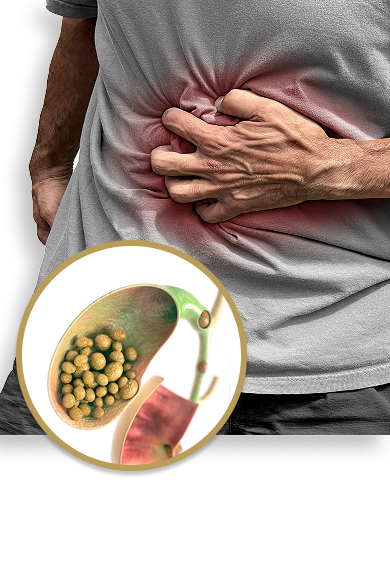
Cholecystectomy is a common procedure to remove the gallbladder, a small, pear-shaped organ located beneath the liver that stores bile (a digestive fluid). This surgery is typically performed when gallstones are present and causing complications.
Gallbladder Removal Surgery (Cholecystectomy)
Cholecystectomy is a common procedure to remove the gallbladder, a small, pear-shaped organ located beneath the liver that stores bile (a digestive fluid). This surgery is typically performed when gallstones are present and causing complications.
Common Symptoms That May Indicate Gallstones
Upper Right Abdominal Pain
Sharp, cramping, or dull pain under the ribs, particularly after consuming fatty meals. The pain may radiate to the back or right shoulder.
Nausea or Vomiting
Often triggered by greasy or heavy foods.
Bloating or Indigestion
Feeling uncomfortably full or gassy after meals.
Fever and Chills
A sign of possible gallbladder infection.
Jaundice
Yellowing of the skin or eyes, which may occur if a gallstone blocks the bile duct.
Dark Urine / Pale Stools
Indications of bile flow disruption.
Why is Gallbladder Removal Surgery done?
The surgery is typically performed for:
Gallstones causing pain or infection (cholelithiasis)
Inflamed gallbladder (cholecystitis)
Gallbladder polyps or tumours
Biliary dyskinesia (poor gallbladder function)
Pancreatitis related to gallstones
Is Surgery Always Necessary?
No, some gallstones can be left alone and monitored with conservative treatment. However, in most cases, surgery (cholecystectomy) will ultimately be required, especially if symptoms persist or complications arise.
Surgery is strongly recommended if the patient experiences symptoms due to gallstones or has a history of gallstone-related complications such as Cholecystitis (gallbladder infection), Cholangitis (bile duct infection), Pancreatitis (inflammation of the pancreas), or bile duct obstruction.
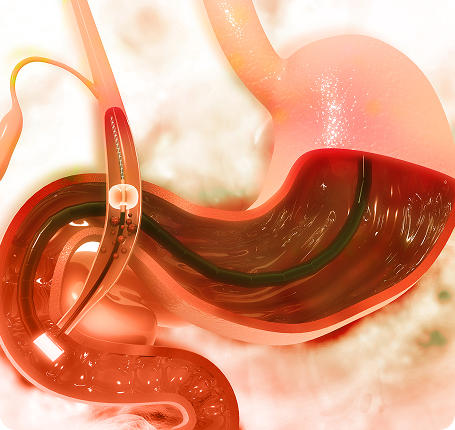
Before proceeding with surgery, Dr Aaron Poh may recommend a Gastroscopy (OGD) to rule out any gastric conditions that could mimic gallstone symptoms. A thorough consultation with a gallbladder specialist is essential to ensure the best treatment plan for your condition.
How is the Gallbladder Removal Surgery (Cholecystectomy) carried out?
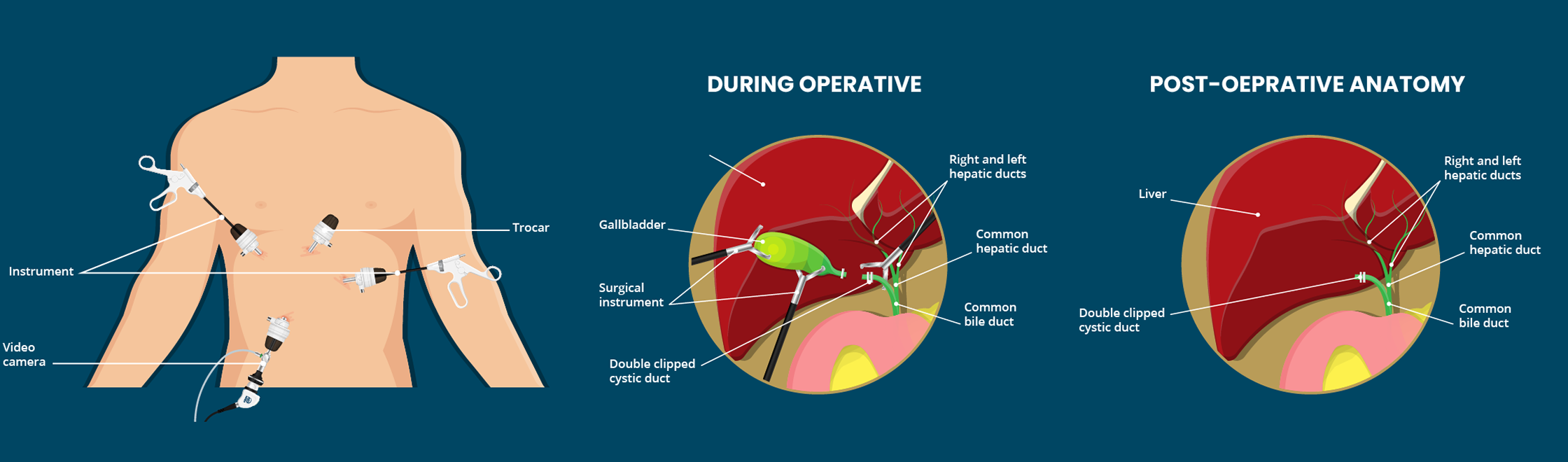
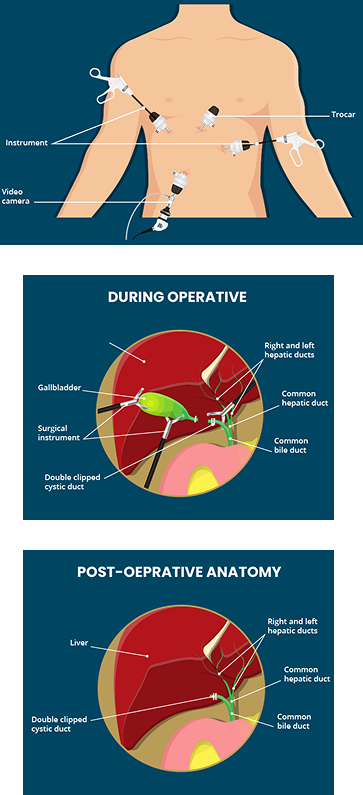
The majority of cholecystectomies are performed as keyhole (laparoscopic) surgeries.
Advantages of keyhole surgeries:
- Smaller wounds
- Lesser physiological stress on the body results in shorter hospital stays and decreased post-operative pain
- Much lower wound infection rates
The gallbladder removal procedure involves four small incisions on the abdomen, each 5mm in length, except for the incision on the belly button (1.5cm in length). During surgery, the entire gallbladder and the gallstones contained within it are removed. The cystic duct, which connects the gallbladder with the common bile duct, will be securely closed off with surgical clips.
After surgery, the gallbladder will not regrow. Like removing your appendix, your body can function normally without a gallbladder, as your liver can make enough bile independently.
Insurance

Integrated Shield Plans
Advisor Partners

Corporate Insurance Plans
Advisor Partners

Book anappointment
MOUNT ELIZABETH (ORCHARD)
- 3 Mount Elizabeth, #14-06 Mount Elizabeth Medical Centre Singapore 228510
- +65 6322 7323
- +65 8875 0080 • After Office Hours
- +65 6602 8086
PARKWAY EASTMEDICAL CENTRE
- 319 Joo Chiat Place #04-07 Singapore 427989
- +65 6589 8160
- +65 8875 2149 • After Office Hours
- +65 6871 8870
Farrer ParkHospital
- 1 Farrer Park Station Rd, #16-04 Connexion, Singapore 217562
- +65 6322 7323
- +65 8875 0080 • After Office Hours
- +65 6871 8870