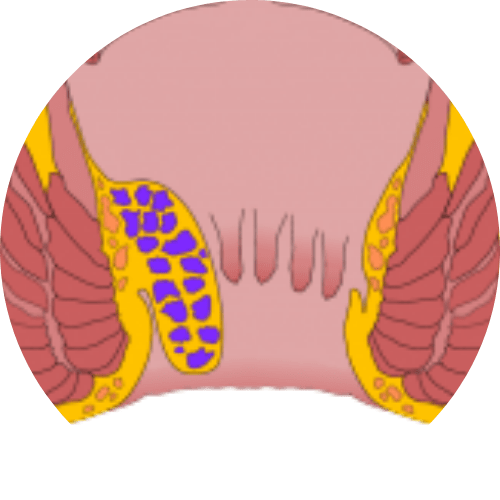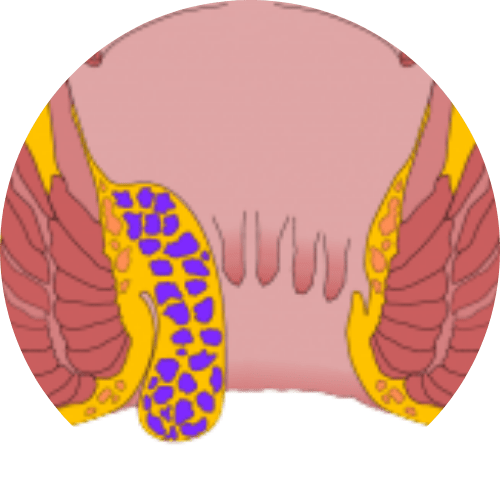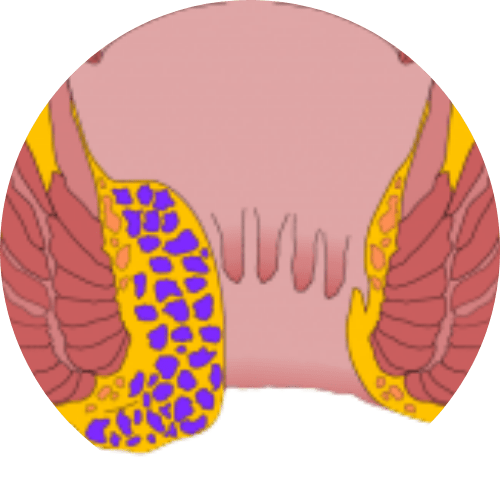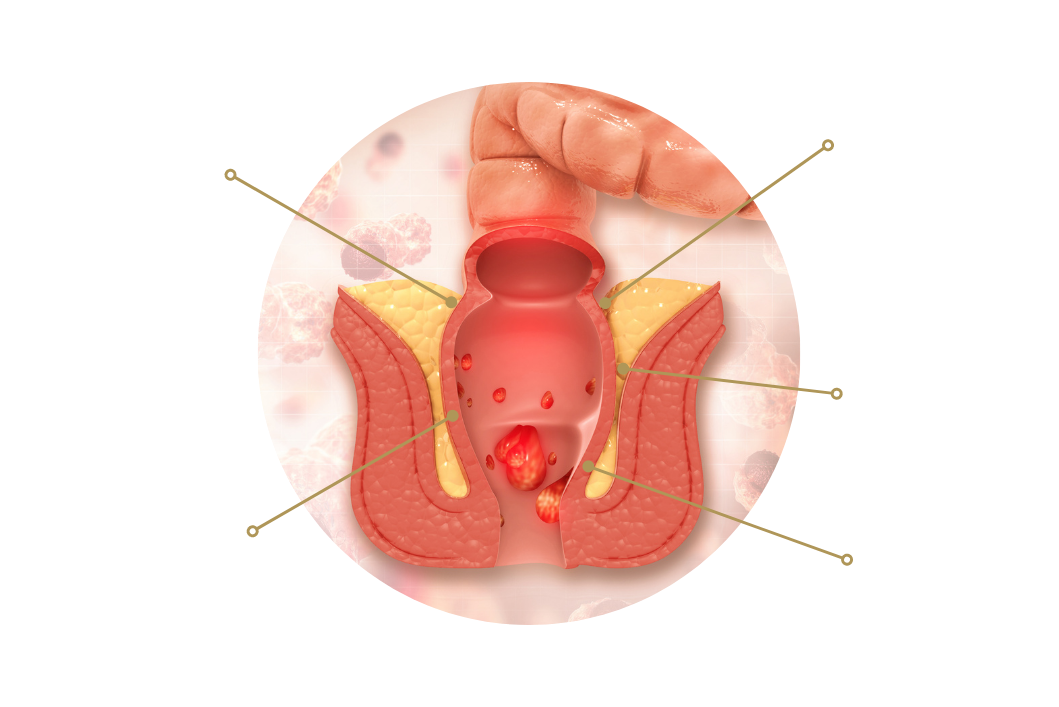

piles/haemorrhoids may be the cause of discomfort & bleeding during bowel movements
Haemorrhoids/piles are enlarged tissue cushions in the anus due to enlarged/congested blood vessels. It is important to note that it is normal to have these tissue cushions. It only becomes problematic when they are enlarged.
The most often attributable cause is prolonged straining/squeezing during the passing of motion. The straining causes the blood vessels and overlying mucosa of the haemorrhoids to stretch out and expand with time.
As the haemorrhoids expand, the patient will then experience the common symptoms of anal bleeding, the sensation of a lump at the anus and sometimes a painful lump due to a strangulated/trapped haemorrhoid. A proper consultation for Singapore piles treatment should be sought out.
If you have persisting symptoms or severe pain & bleeding, immediate medical attention should be sought in order to prevent complications
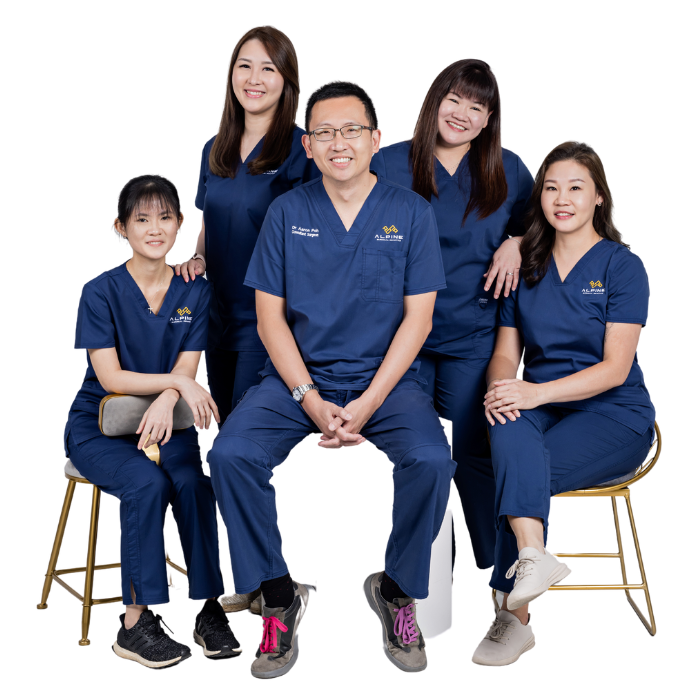
Dr Aaron Poh is a fully accredited General Surgery specialist with the Specialist Accreditation Board and Ministry of Health, with double subspecialties in Colorectal surgery and Trauma surgery. He is currently the Medical Director at Alpine Surgical Practice.

20 YEARS OF EXPERIENCE

5000+ surgeries performed

Colorectal Fellowship
in the UK

Specialisation in Laparoscopic keyhole surgery

Best General Surgeon Gold Winner 2023
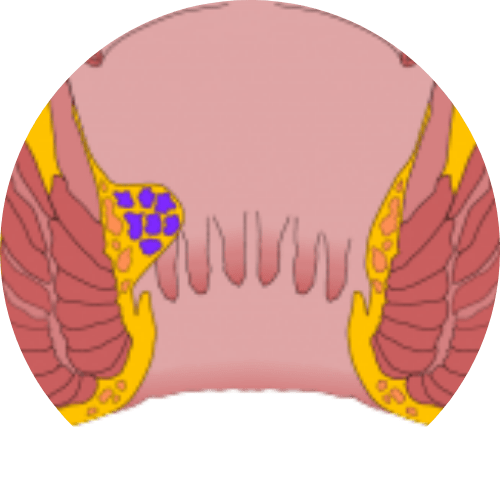
Treatment of Hemorrhoids needs to be tailored to the size and grade of the hemorrhoids and also the patient’s preference. There is usually more than one treatment option available.
First-degree
First-degree haemorrhoids are the smallest in size and do not prolapse. These are usually residing within the anus and is best treated with medications. No form of surgical intervention is helpful due to the small size.
Second-degree
Second-degree haemorrhoids may prolapse/’drop out’ during the passing of motion but they tend to reduce/’go back’ into the anus after passing motion.
The treatment options include:
Third-degree
Third-degree haemorrhoids are larger than second-degree ones and hence ‘drop out’ during the passing of motion but will require the patient to push them back manually. Third-degree haemorrhoids do not reduce/’go back’ by themselves.
Third-degree haemorrhoids also certainly require some form of surgery as they are too large to shrink sufficiently with either medications or rubber band ligation.
The surgical options include stapled haemorrhoidectomy (for smaller third-degree haemorrhoids), or more commonly a conventional haemorrhoidectomy (Milligan-Morgan or Ferguson method).
Fourth-degree
Fourth-degree haemorrhoids are the largest haemorrhoids and are permanently ‘out’ of the anus. They can cause a lot of discomfort during sitting down or walking as they rub against each other or the buttocks.
The only treatment is a conventional haemorrhoidectomy (Milligan-Morgan or Ferguson method).
The rubber band ligation is a clinic procedure Piles surgery in Singapore that takes about 2 min and involves very little discomfort to the patient. The rubber bands usually dislodge after a few days or up to 2 weeks without the patient being aware. The rubber bands cut off the blood supply and hence shrinks the haemorrhoids.
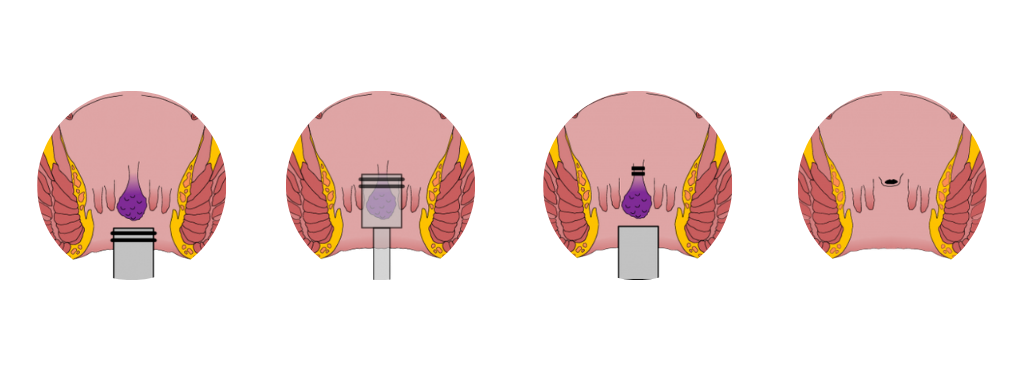
A stapled haemorrhoidectomy involves using a circular surgical stapler that is placed within the upper anus. The stapler will then excise/remove a 1cm ring of the anal lining that contains the blood vessels supplying the haemorrhoids, followed by a row of staples to re-unite the edges of the cut anal lining. The two common systems available on the market is the PROXIMATE® PPH system by Ethicon and EEA™ system by Medtronic.
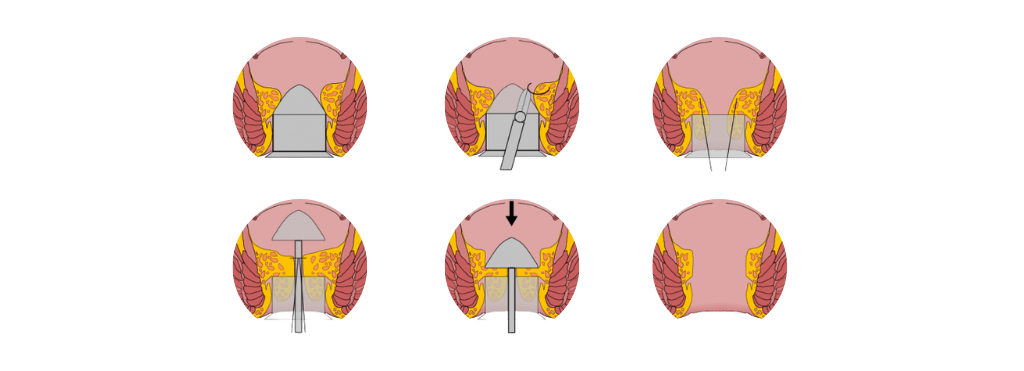
A unique circular stapler reduces the degree of prolapse by cutting an annular mucosal band from the proximal anal canal.
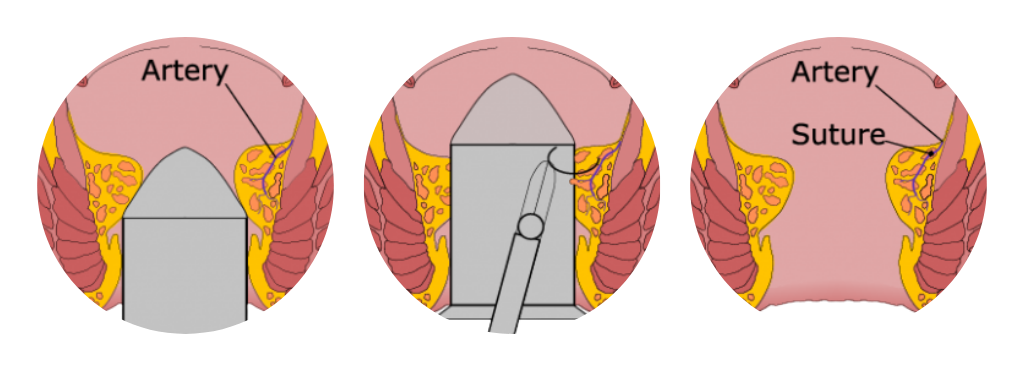
Both procedures utilise the same surgical principle of locating the feeding hemorrhoidal vessels with a specially designed ultrasound probe followed by surgical stitching in the anus to close off the vessels without any wounds.
The THD® Doppler Surgery system and the HALO™ system are the commonest systems on the market. It is important to note that this form of Haemorrhoids surgery in Singapore is more suitable for patients with predominantly bleeding symptoms with minimal prolapse of haemorrhoids.
The Conventional haemorrhoidectomy is the gold standard by which all new hemorrhoidal surgery procedures are compared against. The conventional haemorrhoidectomy method has been in use for over fifty years and is the only treatment option available for large third-degree and fourth-degree haemorrhoids.
The conventional haemorrhoidectomy involves a surgical excision/’cutting out’ of the haemorrhoids with diathermy. The wound can then be left open to heal on its own (Milligan-Morgan method) or stitched up (Ferguson method). Each Piles surgery in Singapore method has its advantages and disadvantages.
These are variants of the conventional haemorrhoidectomy method, with the LigaSure™ surgical sealer or Harmonic® ultrasonic scalpel used in place of the electrical diathermy. The main advantage is that of a lower post-op bleeding risk.
It is important to discuss with your Haemorrhoids surgeon in detail the best treatment option for your condition.
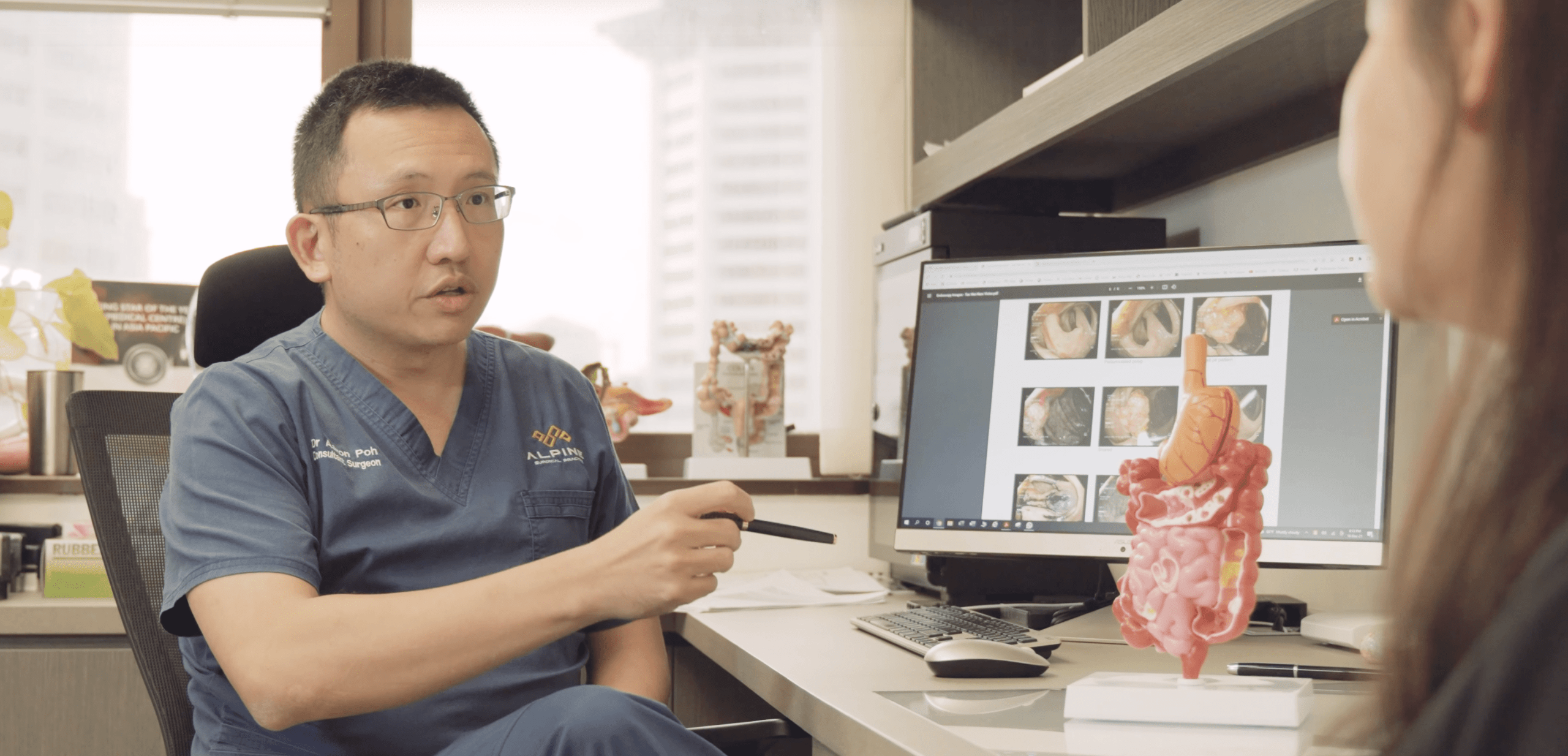
our doctor will assess your condition and advise the best treatment option
For our patients with Integrated Shield plans with riders for private hospital coverage, Alpine Surgical Practice is able to help you with the application of the Letter of Guarantee (LOG) or Pre-Authorisation Certificates for cashless payment on the day of your procedure. In addition, we work with the Hospital or Surgical centres to do Electronic filing for your medical claims.
Advisor Partners
We understand that some of your insurance plans may come with deductible and co-insurance. Our insurance advisor partners will advise you on how to utilise your Medisave and your existing Corporate insurance to cover the deductible and co-insurance so that there is minimal cash outlay.
We also understand that with the increasing adoption of pay-per-use insurance policies with rise in premiums per claim, it is important to control costs. As such, Alpine Surgical Practice works with our partnering Day Surgery centers to cut down costs for minor procedures and scopes.
For our patients with Corporate insurance plans, Alpine Surgical Practice is similarly able to help with the application of Letter of Guarantee (LOG) or Pre-Authorisation Certificates for cashless payment on the day of your procedure. Alpine Surgical Practice is on the panel for the following plans and that enables us to see you with the relevant referral letter from your GP or another specialist.
Advisor Partners
We understand that some corporate insurance policies may not provide full coverage and our insurance advisor partners can advise on how to utilise your Medisave to cover the remaining sum so that there is minimal cash outlay.
It is important that your medical problems are being managed without worrying about the nuances of the insurance claims. Our Alpine staff will be able to help you with both your medical and insurance needs.