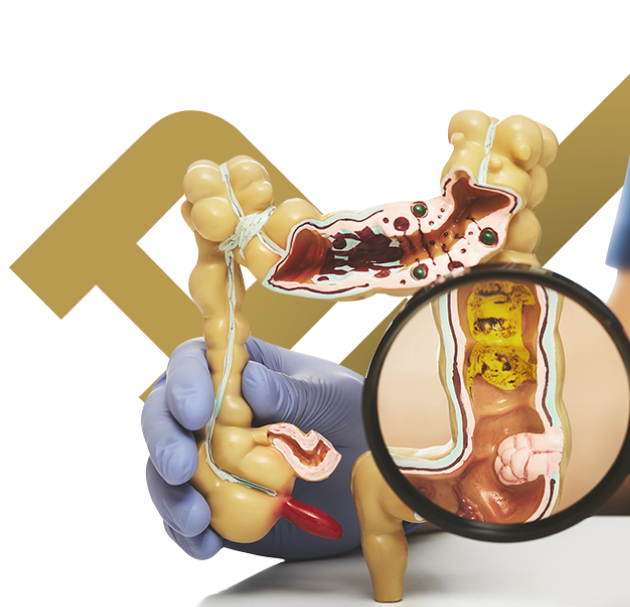
IBS carries similar symptoms to colon cancer. Get an accurate diagnosis.
Irritable bowel syndrome, commonly referred to as IBS affects approximately 20% of Singaporeans. It is a chronic functional gastrointestinal condition, which means there is a problem with the gut-brain interaction. Thus, it leads to a hypersensitive digestive system and abnormal contractions of the large intestines (colon).
Typical symptoms of IBS are accompanied by frequent but small amounts of watery and loose stools and sudden urges to go to the toilet.
Typical symptoms of IBS include hard and lumpy stools that are difficult to pass. Bowel movements may also be restricted to once a week.
Also known as IBS-A or alternating IBS. Typical symptoms of IBS are accompanied by a mixture of both diarrhoea and constipation. Stools alternate between watery and loose or hard and lumpy.

Although these symptoms are common in other gastrointestinal conditions, such as gastroenteritis, they are usually short-term and will resolve eventually. However, individuals with IBS experience long-term symptoms that do not resolve permanently. Additionally, women with IBS often experience a flare-up of symptoms during their periods.

Although these symptoms are common in other gastrointestinal conditions, such as gastroenteritis, they are usually short-term and will resolve eventually. However, individuals with IBS experience long-term symptoms that do not resolve permanently. Additionally, women with IBS often experience a flare-up of symptoms during their periods.
Ignoring the symptoms or relying on these quick fixes can lead to years of frustration and discomfort.
IBS is diagnosed by exclusion, meaning your doctor must rule out other potential conditions that could cause similar symptoms before confirming IBS.
To achieve an accurate diagnosis, you may need to undergo the following tests:
is a fully accredited General Surgery specialist with the
Specialist Accreditation Board and Ministry of Health, with double subspecialties in Colorectal surgery and Trauma surgery.
He is currently the Medical Director at Alpine Surgical Practice.
is a fully accredited General Surgery specialist with the
Specialist Accreditation Board and Ministry of Health, with double subspecialties in Colorectal surgery and Trauma surgery.
He is currently the Medical Director at Alpine Surgical Practice.
There is currently no known cause of IBS and, hence, no way to prevent it.
No. Although IBS and colon cancer have overlapping symptoms, colon cancer is not a complication of IBS, nor does IBS increase the risk of colon cancer. Various tests may be conducted to rule out colon cancer, and individuals are advised to go for regular colon cancer screenings as they age.
IBS is a varying condition. This means that different types of food may trigger different people. It is important to be aware of your food triggers so that you know which foods to avoid. Keep a food diary and note down all meals. This will help you identify your trigger foods and allow you to avoid them in future meals.
The symptoms of IBS come and go. Severe symptoms do not last forever and will usually become milder or disappear as time passes. However, this does not mean you are completely cured of IBS. The symptoms of IBS can recur at different stages of life, such as during high-stress situations or consuming trigger foods.
Alpine Surgical Practice offers assistance in obtaining cashless payment through Letter of Guarantee (LOG) or Pre-Authorisation Certificates for integrated shield plan patients, and also collaborates with hospitals for electronic filing of medical claims.
We collaborate with insurance advisors to guide patients in using Medisave and corporate insurance to minimize cash expenses for deductible and co-insurance, and also partner with Day Surgery centers to reduce costs for minor procedures in response to rising pay-per-use insurance premiums.
Alpine Surgical Practice facilitates cashless payments through Letter of Guarantee (LOG) or Pre-authorisation Certificates for Corporate insurance patients and accepts referrals from GPs or specialists covered by their panel plans.
Our insurance advisors can assist in using Medisave to minimize cash payments for uncovered portions of corporate insurance, ensuring seamless medical management without claim concerns, supported by Alpine staff for both medical and insurance matters.